
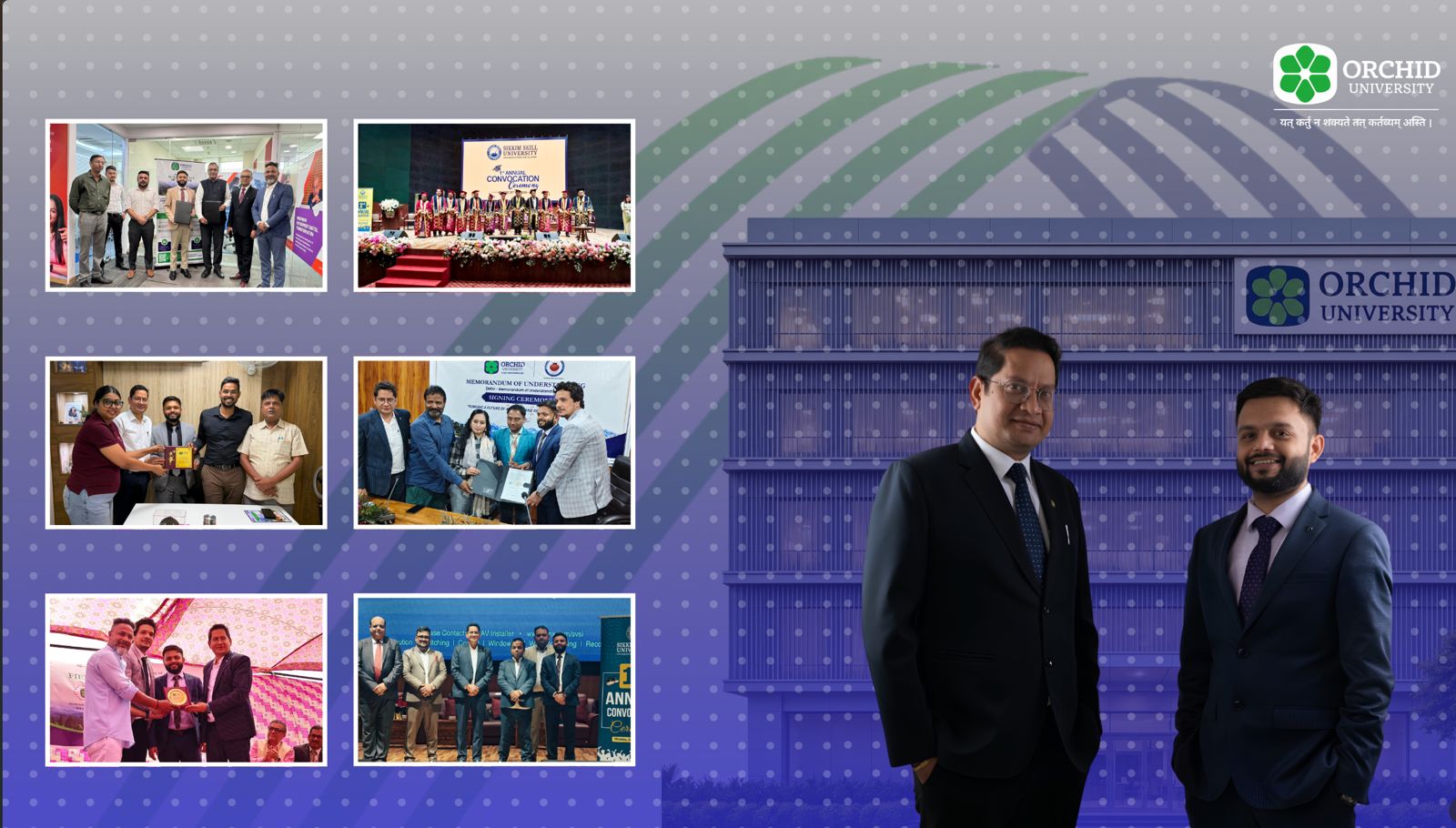
SIKKIM: Orchid University has introduced a new higher education model that places practical learning and industry experience at the center of academic education. The university says its approach is designed to address the growing gap between classroom learning and workplace expectations by combining degree programs with paid apprenticeships, live industry projects, and professional training.
The initiative comes at a time when employers across sectors are placing greater emphasis on practical skills, digital capabilities, and work experience. Many graduates continue to face challenges in securing employment despite holding academic qualifications, prompting educational institutions to rethink conventional teaching methods.
A Shift from Theory-Centered Education
Traditional higher education in India has largely relied on classroom instruction and written examinations. While these methods provide academic knowledge, employers have increasingly pointed to a lack of practical exposure among fresh graduates.
Orchid University has introduced a curriculum that focuses on practical application alongside academic study. According to the university, around 70 percent of learning is based on hands-on training, while the remaining 30 percent covers theoretical concepts. This structure aims to help students understand how classroom knowledge applies in professional settings.
The university believes that work experience during a degree program can help students build stronger technical and workplace skills before graduation, reducing the learning curve when they enter full-time employment.
Work-Integrated Learning Forms the Core of the Curriculum
One of the defining features of Orchid University’s academic model is its Work Integrated Learning Program. Under this framework, students participate in paid apprenticeships, live corporate assignments, and professional certification programs while completing their academic coursework.
Instead of limiting learning to lectures and examinations, students work with industry professionals on projects that reflect real business challenges. These experiences are intended to give learners practical exposure while allowing them to continue their studies.
University officials say the objective is to ensure that students graduate with both academic credentials and documented work experience, making them better prepared for recruitment processes across industries.
Paid Apprenticeships Aim to Reduce Financial Pressure
Higher education costs remain a major concern for many families across India. Orchid University says its work-integrated approach allows eligible students to earn an income during their education through structured apprenticeship opportunities.
This model is expected to reduce financial barriers that often prevent students from completing higher education. Rather than waiting until graduation to begin earning, students can gain industry exposure while receiving financial support through apprenticeship programs.
Education experts have noted that similar work-study models have been adopted in several international education systems, where practical employment forms part of a student’s academic journey.
Industry Collaboration Supports Practical Training
The university has developed its academic ecosystem with support from Distil Education Group, which has contributed to designing programs that align with current industry requirements.
According to Orchid University, collaboration with corporate partners allows students to work on live projects while learning from experienced professionals. These partnerships also help institutions keep academic content aligned with changing industry standards.
The university states that it has access to a network of more than 800 corporate partners across different sectors. These collaborations are expected to support apprenticeships, internships, project-based learning, and skill development opportunities throughout a student’s degree program.
Supporting Employability Through Skill Development
The conversation around employability has become increasingly important in India’s higher education sector. Employers often seek candidates who possess communication skills, technical knowledge, problem-solving ability, and workplace readiness in addition to academic qualifications.
Orchid University says its curriculum has been designed to strengthen these areas through continuous workplace engagement. Students are expected to develop practical skills while also building professional confidence, teamwork, and communication through industry interaction.
The university believes that combining classroom education with workplace learning allows graduates to enter the job market with stronger resumes and practical experience.
Focus on National Education Priorities
Along with industry readiness, Orchid University says its long-term vision aligns with India’s broader education and development goals. The institution has stated that improving access to higher education and increasing employability remain key priorities.
The university is also working on initiatives intended to support the country’s Gross Enrolment Ratio (GER) in higher education by creating more flexible pathways for students from different economic backgrounds.
Officials say the institution wants to make higher education more accessible by integrating earning opportunities into degree programs, allowing students to continue their education without facing the full financial burden associated with traditional university models.
Collaboration with Government Initiatives
Orchid University has also announced collaborations that support national development initiatives. Among these is its association with the Ministry of Women and Child Development (MoWCD), which focuses on education, research, and capacity-building programs.
The university says these efforts are aimed at creating opportunities for inclusive learning while contributing to workforce participation and skill development. Such collaborations are intended to support social development alongside academic progress.
The institution also aligns its apprenticeship-based approach with the National Apprenticeship Promotion Scheme (NAPS), which encourages practical workplace training across industries.
Building Leadership Alongside Professional Skills
Beyond technical education, Orchid University says it aims to encourage leadership qualities, ethical decision-making, and social responsibility among students.
University representatives believe that future professionals should possess both career skills and an understanding of community responsibilities. As part of this approach, the institution promotes an academic environment where students from different backgrounds learn together while participating in practical and collaborative experiences.
According to university leadership, higher education should prepare learners not only for employment but also for meaningful participation in society.
A Different Approach to Modern University Education
The higher education sector continues to evolve as employers seek graduates who can contribute from the beginning of their careers. Universities across India are increasingly exploring practical learning models, internships, and industry partnerships to improve employment outcomes.
Orchid University’s academic framework reflects this broader shift by combining degree education with workplace experience throughout a student’s academic journey. Rather than treating practical training as a separate activity after graduation, the institution has integrated it into the learning process itself.
The university says this approach is intended to create graduates who are academically qualified, professionally experienced, and prepared for the changing demands of modern industries.
About Orchid University
Orchid University is a UGC-recognized institution based in Sikkim that focuses on work-integrated higher education. The university combines academic learning with practical industry exposure through apprenticeships, live corporate projects, professional certifications, and employer partnerships. Supported by Distil Education Group and aligned with initiatives such as the National Apprenticeship Promotion Scheme (NAPS), the institution says it aims to strengthen employability while expanding access to skill-based higher education in India.
